Showing posts with label science education. Show all posts

Sunday, July 08, 2012

Learning as Identity Formation: Interesting presentation by Jochen Rick and Colleagues (video)


The above video is from a presentation from the recent ICLS 2012 conference, held in Sydney, Australia.


RELATED
Paper: "Learning as Identity Formation: Implication for Design, Research, and Practice"


Authors
Jochen Rick, Saarland University
Ben DeVane, University of Florida
Tamara Clegg, University of Maryland
Vanessa L. Peters, University of Michigan
Nancy Butler Songer, University of Michigan
Susan R. Goldman, University of Illinois
Cindy E. Hmelo-Silver, Rutgers University


Cross posted on the Interactive Multimedia Technology blog.

Sunday, February 05, 2012

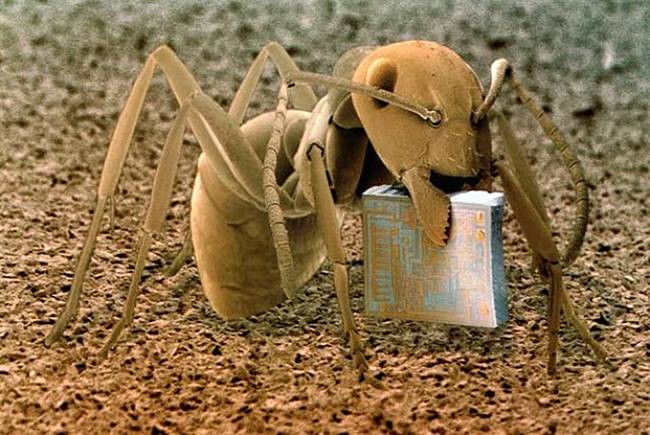
Microcosmos, by Brandon Broll: Awesome Scanning Electron Microscope Pics


  Microcosmos: Discovering The World Through Microscopic Images From 20 X to Over 22 Million X Magnification

The following photos were forwarded to me by my husband. I am not sure where they came from originally, but they are included in Brandon Broll's book, "Microcosmos: Discovering The World Through Microscopic Images From 20 X to Over 22 Million X Magnification"

http://n7qvc.files.wordpress.com/2011/02/image001.jpg
An ant, Formica fusca, holding a microchip

http://n7qvc.files.wordpress.com/2011/02/image002.jpg
Surface of an Erasable Programmable Read-Only Memory silicon microchip

http://n7qvc.files.wordpress.com/2011/02/image003.jpg
Eyelash hairs growing from the surface of human skin

http://n7qvc.files.wordpress.com/2011/02/image004.jpg
The surface of a strawberry

http://n7qvc.files.wordpress.com/2011/02/image005.jpg
Bacteria on the surface of a human tongue

http://n7qvc.files.wordpress.com/2011/02/image006.jpg
Human sperm (spermatozoa)

http://n7qvc.files.wordpress.com/2011/02/image007.jpg
Nylon hooks and loops of Velcro

http://n7qvc.files.wordpress.com/2011/02/image008.jpg
Household dust: includes long hairs of cat fur, twisted synthetic and woolen fibers,
serrated insect scales, a pollen grain, and plant and insect remains

http://n7qvc.files.wordpress.com/2011/02/image009.jpg
The weave of nylon stocking fibers

http://n7qvc.files.wordpress.com/2011/02/image010.jpg
The head of a mosquito

http://n7qvc.files.wordpress.com/2011/02/image011.jpg
Head louse clinging to a human hair

http://n7qvc.files.wordpress.com/2011/02/image012.jpg
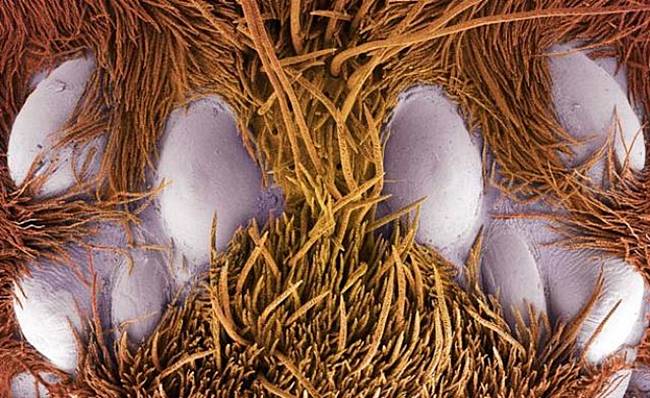
Eight eyes (two groups of four) on the head of a tarantula

http://n7qvc.files.wordpress.com/2011/02/image013.jpg
Cut human hairs and shaving foam between two razor blades

http://n7qvc.files.wordpress.com/2011/02/image014.jpg
Cigarette paper the tobacco is rolled in

http://n7qvc.files.wordpress.com/2011/02/image015.jpg
Corroded surface of a rusty nail

http://n7qvc.files.wordpress.com/2011/02/image016.jpg
Mushrooms spores

http://n7qvc.files.wordpress.com/2011/02/image017.jpg
Clutch of butterfly eggs on a raspberry plant

http://n7qvc.files.wordpress.com/2011/02/image018.jpg
Calcium phosphate crystal
    No wonder modern forensics solves so many crimes.

Wednesday, July 11, 2007

Link to Interactive Multimedia Technology post about JOVE in Wired: "YouTube does Science"

Take a look at my post on Interactive Multimedia Technology about an article in Wired about JOVE: Journal of Visualized Experiments.

This is an example of how video/media can support engaged learning in science. This would appeal to visual learners.