http://www.scribd.com/doc/24470331/iPhone-iPad-and-iPod-touch-Apps-for-Special-Education
Tuesday, March 06, 2012
Update: Link to Eric Sailer's List of iPad, iPhone, and iPod Touch Apps for Special Education
Eric Sailer's List of iPhone, iPad, and iPod-Touch apps for special education, updated 10/2011:
http://www.scribd.com/doc/24470331/iPhone-iPad-and-iPod-touch-Apps-for-Special-Education
Sunday, February 05, 2012
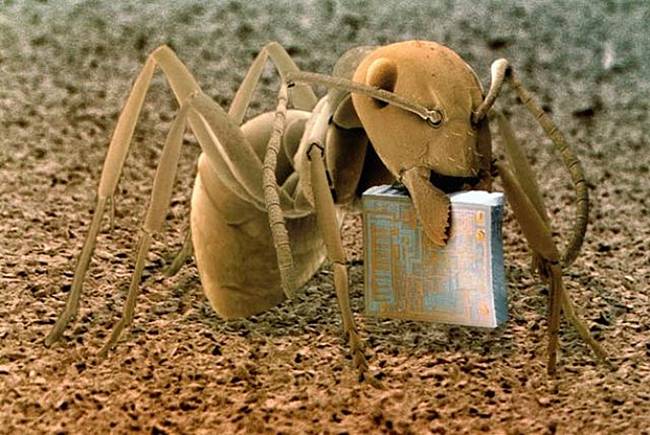
Microcosmos, by Brandon Broll: Awesome Scanning Electron Microscope Pics
The following photos were forwarded to me by my husband. I am not sure where they came from originally, but they are included in Brandon Broll's book, "Microcosmos: Discovering The World Through Microscopic Images From 20 X to Over 22 Million X Magnification"
An ant, Formica fusca, holding a microchipSurface of an Erasable Programmable Read-Only Memory silicon microchipEyelash hairs growing from the surface of human skinThe surface of a strawberryBacteria on the surface of a human tongueHuman sperm (spermatozoa)Nylon hooks and loops of VelcroHousehold dust: includes long hairs of cat fur, twisted synthetic and woolen fibers,
serrated insect scales, a pollen grain, and plant and insect remainsThe weave of nylon stocking fibersThe head of a mosquitoHead louse clinging to a human hairEight eyes (two groups of four) on the head of a tarantulaCut human hairs and shaving foam between two razor bladesCigarette paper the tobacco is rolled inCorroded surface of a rusty nailMushrooms sporesClutch of butterfly eggs on a raspberry plantCalcium phosphate crystalNo wonder modern forensics solves so many crimes.
Saturday, February 04, 2012
New iPad apps from Inclusive Technology!
I use resources from the HelpKidzLearn website by Inclusive Technology in my work at as a school psychologist at Wolfe School quite frequently. The students who participate in the program at Wolfe have complex disabilities, including autism. We have a growing number of younger students, and I've found the resources from Inclusive Technology to be a good fit.
Although many of the students can interact with the content provided on the HelpKidzLearn website on SMARTboards, those who can't can do so using switches, as the website provides a range of switch-accessible activities.
I use my personal iPad at work, as does the program's speech and language therapist. She recently downloaded several new apps developed by Inclusive Technology for the iPad. I just purchased a few of the apps and think that they will be very useful in my work with students, especially during informal assessment of those who have limitations across most domains.
Below is a video clip from Inclusive Technology that provides a nice overview of the apps, which are switch-accessible. More apps for the iPad are in the planning stages. This is great news!
RELATED
Inclusive Technology, UK Site
Inclusive Technology, US Site
HelpKidzLearn
Inclusive Technology has several items that provide students with disabilities access to iPads. Here are the links (US):
Big Grips Frame for iPad and iPad2
it-iClick-iPad Switch Interface
Inclusive iPad Mounts
Maxess Accessories
iAdapter for iPad
Blue2 Bluetooth Switch
Although many of the students can interact with the content provided on the HelpKidzLearn website on SMARTboards, those who can't can do so using switches, as the website provides a range of switch-accessible activities.
I use my personal iPad at work, as does the program's speech and language therapist. She recently downloaded several new apps developed by Inclusive Technology for the iPad. I just purchased a few of the apps and think that they will be very useful in my work with students, especially during informal assessment of those who have limitations across most domains.
Below is a video clip from Inclusive Technology that provides a nice overview of the apps, which are switch-accessible. More apps for the iPad are in the planning stages. This is great news!
RELATED
Inclusive Technology, UK Site
Inclusive Technology, US Site
HelpKidzLearn
Inclusive Technology has several items that provide students with disabilities access to iPads. Here are the links (US):
Big Grips Frame for iPad and iPad2
it-iClick-iPad Switch Interface
Inclusive iPad Mounts
Maxess Accessories
iAdapter for iPad
Blue2 Bluetooth Switch
Labels:
accessibility,
accessories,
apps,
help kidz learn,
Inclusive technology,
iPad,
switch access
Thursday, January 19, 2012
iPads: iTunesU App, iBooks Textbooks -- Oh, my!
There is a lot of buzz about iPads in education.
I'm convinced that tablet technology will be adopted by schools at a faster rate than anticipated a year or so ago, now that Apple has launched iBooks Textbooks for iPad and the iTunesU app.
Parents, teachers, students, administrators, and school IT specialists, hold on to your hats!
RELATED
Learning Together: The Evolution of a 1:1 iPad Program
Carolyn Foote, Internet@Schools, 1/1/12
The Swiss-Army Knife of Education
Mr. Hooker, The WIFI--Eanes ISD iPad Pilot Project, 10/3/11
iPads in Education
John Evans, Curator
iBooks Textbooks
iTunesU App
iPad for Art: Sketchbook Express, via the Montlieu Academy of Technology, a public K-5 magnet school that adopted a 1:1 iPad initiative in August, 2011. I'm convinced that tablet technology will be adopted by schools at a faster rate than anticipated a year or so ago, now that Apple has launched iBooks Textbooks for iPad and the iTunesU app.
Parents, teachers, students, administrators, and school IT specialists, hold on to your hats!
RELATED
Learning Together: The Evolution of a 1:1 iPad Program
Carolyn Foote, Internet@Schools, 1/1/12
The Swiss-Army Knife of Education
Mr. Hooker, The WIFI--Eanes ISD iPad Pilot Project, 10/3/11
iPads in Education
John Evans, Curator
iBooks Textbooks
iTunesU App
COMMENT
I have been planning on devoting more posts in the future about the iPad and related interactive technologies for learning- and for fun. When I have a chance to write my mega-post, you won't be disappointed!
Cross-posted on the Interactive Multimedia Technology blog.
Monday, January 16, 2012
GeekDads (and Moms with Apps)
GeekDad's Post: The Changing Nature of App Design for Kids (quick link)
The Changing Nature of App Design and Development for Kids
Daniel Donahoo, GEEKDAD, Wired, 1/16/12
"During 2011, I have observed a real push towards app development and digital design for children that is respectful and purposeful - not just a marketing and money making exercise." -Daniel Donahoo
I encourage you take the time to read Daniel Donahoo's thoughtful post!
Daniel Donahoo, GEEKDAD, Wired, 1/16/12
"During 2011, I have observed a real push towards app development and digital design for children that is respectful and purposeful - not just a marketing and money making exercise." -Daniel Donahoo
I encourage you take the time to read Daniel Donahoo's thoughtful post!
RELATED
GeekDad Opinion: We Need a Children's Apps Rating System
Daniel Donahoo, GEEKDAD, Wired, 12/11/10
Moms with Apps Workshop Summary
Moms with Apps, 12/4/11
GeekDad Opinion: We Need a Children's Apps Rating System
Daniel Donahoo, GEEKDAD, Wired, 12/11/10
Moms with Apps Workshop Summary
Moms with Apps, 12/4/11
Cross-posted on the Interactive Multimedia Technology blog
Labels:
apps,
children,
designing for children,
geek,
GeekDad,
interactive,
iPad,
iPhone,
learning,
moms,
moms with apps
How To Use Game Dynamics In The Classroom (Cross-posted on the Interactive Multimedia Technology blog)
Although the article refers to the work of Liz Gross and her colleague(s) focusing on the use of game dynamics in a large university lecture class, there are links to a variety of interesting resources and posts that address games in education across many settings. This work is part of a research proposal for funding from the Digital Media + Learning competition.
RELATED
Digital Media and Learning Conference
March 1-13, 2012
UC Humanities Research Institute University of California, Irvine
About the Conference (info from the DML website)
"The Digital Media and Learning Conference is an annual event supported by the MacArthur Foundation and organized by the Digital Media and Learning Research Hub located at the UC Humanities Research Institute, University of California, Irvine. The conference is meant to be an inclusive, international and annual gathering of scholars and practitioners in the field, focused on fostering interdisciplinary and participatory dialog and linking theory, empirical study, policy, and practice. The third annual conference – DML2012 – is organized around the theme “Beyond Educational Technology: Learning Innovations in a Connected World” and will be held between March 1-3, 2012 in San Francisco, California."Keynote: John Seely Brown
Plenary Panelists: Eleizabeth Corcoran, Renaldo Lemos, Leslie Redd, and Constance M. Yowell
Conference Committee:
Diana Rhoten, Conference Chair
Tracy Fullerton: Re-imagining Media for Learning Chair
Antero Garcia: Innovations for Public Education Chair
Mitch Resnick: Making, Tinkering and Remixing Chair
Mark Surman: Democratizing Learning Innovation Chair
Jess Klein: Democratizing Learning Innovation Co-Chair
Thanks to Yasmine Kasbi for sharing the post on Google+!
Thursday, November 24, 2011
Mind/Shift Post: Read, Hear, or Create a Story: Apps for Traveling with Kids", plus a few interesting links!
Today is Thanksgiving, and one of the things I'm thankful for is the opportunity to share interesting ideas and links with readers of this blog! (Cross-posted on the Interactive Multimedia Technology blog.)
The following post was written by Tina Barseghian, who is an editor/blogger at KQED/NPR for the Mind/Shift blog. Mind/Shift focuses on ideas and technology that will impact the future of how we learn.
Read, Hear, or Create a Story: Apps for Traveling with Kids Tina Barseghian, Mind/Shift, 11/23/11
Link to other Mind/Shift post collections:
Children and Social Media
Tech Tools
Mobile Learning
Digital Divide
School Day of the Future
RELATED
Boredom Busters: 50 Fantastic Play-and-Learn Apps, Sites, and Toys
Tina Barseghian, Mind/Shift, 6/17/11
Libraries and Museums Become Hands-On Learning Labs
Audrey Watters, Mind/Shift, 11/23/11
"A new competition sponsored by the Institute for Museum and Library Services (IMLS) and the John D. and Catherine T. MacArthur Foundation has just announced 12 winning libraries and museums that will receive $1.2 million in grant money to help push the boundaries of what these institutions look like, specifically helping to create facilities that are better "learning labs" for teens"
Lauren Britton Smedley (Transliteracy Development Director a the Fayetteville Free Library)
IDEO's Design for Learning (Sandy Speicher, Duane Bray, Rachel Switzky)
K12 Laboratory at D. School (Stanford)
Books Should Be Free
Storynory, Storynory iTunes Library: Podcasted stories for children, offers a free audio story every week, has some online multimedia activities.
The following post was written by Tina Barseghian, who is an editor/blogger at KQED/NPR for the Mind/Shift blog. Mind/Shift focuses on ideas and technology that will impact the future of how we learn.
Read, Hear, or Create a Story: Apps for Traveling with Kids Tina Barseghian, Mind/Shift, 11/23/11
Link to other Mind/Shift post collections:
Children and Social Media
Tech Tools
Mobile Learning
Digital Divide
School Day of the Future
RELATED
Boredom Busters: 50 Fantastic Play-and-Learn Apps, Sites, and Toys
Tina Barseghian, Mind/Shift, 6/17/11
Libraries and Museums Become Hands-On Learning Labs
Audrey Watters, Mind/Shift, 11/23/11
"A new competition sponsored by the Institute for Museum and Library Services (IMLS) and the John D. and Catherine T. MacArthur Foundation has just announced 12 winning libraries and museums that will receive $1.2 million in grant money to help push the boundaries of what these institutions look like, specifically helping to create facilities that are better "learning labs" for teens"
Lauren Britton Smedley (Transliteracy Development Director a the Fayetteville Free Library)
IDEO's Design for Learning (Sandy Speicher, Duane Bray, Rachel Switzky)
K12 Laboratory at D. School (Stanford)
Books Should Be Free
Storynory, Storynory iTunes Library: Podcasted stories for children, offers a free audio story every week, has some online multimedia activities.
Labels:
apps,
children,
family,
future technology,
learning,
mind/shift,
storynory,
tina barseghian,
traveling
Thursday, November 10, 2011
Friday, November 04, 2011
CALL FOR PAPERS: Educational Interfaces, Software, and Technology, ACM CHI 2012
CALL FOR PAPERS
EDUCATIONAL INTERFACES, SOFTWARE, AND TECHNOLOGY 2012
3rd Workshop on UI Technologies and Educational Pedagogy
May 5-6 2012
in conjunction with ACM-CHI 2012, Austin, Texas
This will be our third annual workshop in conjunction with CHI 2012.
One of the primary goals of teaching is to prepare learners for life in the real world. In this ever changing world of technologies such as mobile interaction, cloud computing, natural user interfaces, and gestural interfaces like the Nintendo Wii and Microsoft Kinect, people have a greater selection of tools for the task at hand. Teachers and students can leverage these tools to improve learning outcomes. Educational interfaces and software are needed to ensure that new technologies serve a clear purpose in the classrooms and homes of the future.
Since teachers are always looking for creative ways to engage 21st century learners, there needs to be an academic venue for researchers to discuss novel educational tools and their role in improving learning outcomes. This workshop aims at filling this void: combining the pedagogical expertise of the cooperative learning, and learning sciences communities with the technical creativity of the CHI, UIST and interactive surface communities. The objective of this workshop is to become a conference within two years.
We invite authors to present position papers about potential design challenges and perspectives on how the community should handle the next generation of HCI in education.
Topics of interest include:
- Gestural input, multitouch, large displays
- Mobile Devices, response systems (clickers)
- Tangible, VR, AR & MR, Multimodal interfaces
- Console gaming, 3D input devices
- Co-located interaction, presentations
- Educational Pedagogy, learner-centric, Child Computer Interaction
- Empirical methods, case studies
- Multi-display interaction
- Wearable educational media
Submission: The deadline for workshop paper submissions is Dec 20, 2011. Interested researchers should submit a 4-page position paper in the ACM CHI adjunct proceedings style to the workshop management system. Acceptance notifications will be sent out February 20, 2012. The workshop will be held May 5-6, 2012 in Austin, Texas. Please note that at least one author of an accepted position paper must register for the workshop and for one or more days of the CHI 2012 conference.
Website: https://sites.google.com/site/eist2012/
Workshop Organizers: https://sites.google.com/site/eist2012/home/organizers
Important Dates: https://sites.google.com/site/eist2012/home/dates
School Districts on Facebook, Twitter, YouTube, and More!
A few years ago, social networking and media sites were seemingly frowned-upon by traditional K-12 school districts, but no more. It is a great way to get the word out to parents, as well as the general public, about the positive things going on in our schools.
Below is just one of many examples. High school students in the UCPS district sponsor a prom for students with special needs, including those who attend the program at Wolfe, one of the schools I serve as a school psychologist. Below is a short video from the UCPS YouTube channel that features highlights of the most recent prom, which had a "Hollywood" theme.
(I'm home today with a stomach bug, so I had a moment to share something positive about the great students in the UCPS district!)
Below is just one of many examples. High school students in the UCPS district sponsor a prom for students with special needs, including those who attend the program at Wolfe, one of the schools I serve as a school psychologist. Below is a short video from the UCPS YouTube channel that features highlights of the most recent prom, which had a "Hollywood" theme.
(I'm home today with a stomach bug, so I had a moment to share something positive about the great students in the UCPS district!)
Labels:
education,
k12,
positive,
prom,
social,
SOCIAL MEDIA,
special needs,
teens,
youtube
Friday, October 28, 2011
Quick Link: 60 Minutes Segment -iPads and Autism Segment
Take a few minutes to watch the 60 Minutes segment about iPad apps and autism!
http://www.cbsnews.com/video/watch/?id=7385686n
Saturday, September 10, 2011
Update; iGaze a[[ bu Dunedin Multimedia, good for group social skills activities
(This is cross-posted on the Interactive Multimedia Technology blog)
So what am I up to now?
I'd like to share with my readers that I've decided to continue in my present position as a school psychologist, while still devoting a portion of my free time to technology. From time-to-time I think deep thoughts about usability, accessibility, and UX/Interaction related to off-the-desktop interactive multimedia applications running on screens of all sizes. I'm hoping to create a few multimedia experiments using HTML5 and JavaScript, and explore jQuery if and when I can find the time!
For the present school year, my main school is a program for students with more significant disabilities, including autism spectrum disorders. My second school is a magnet high school for technology and the arts, located on the same campus. I also consult throughout the district on cases involving students who have suffered traumatic brain injuries, as well as students who have multiple disabilities. I am thankful that I have a job in a school district that values 21st Century technology.
I'm looking forward to another technology-rich school year. I've spent some of the time I usually devote to blogging devoted exploring iPad apps instead. Since I'm new to the world of iPads, I'm still in discovery mode. What an adventure!
There are plenty of educational apps out there, and many of them are suitable for students with special needs. On the other hand, there is much room for improvement - across all iPad app categories. Since there is very little research about what makes up a killer app- or suite of apps- for students with special needs, experimenting with iPad apps is uncharted territory.
I made the decision to bring my personal iPad2 to work after I discovered a number of apps that I thought would be useful in my work as a school psychologist with students who have special needs, including autism spectrum disorders.
One of my intervention themes this year focuses on social skills. This is especially important for students who participate in our schools community-based job training program. I'm using some content from Unique Learning's transition materials, as well as on-line activities from Do2Learn's JobTips website, because my aim is to facilitate social skills that will be useful in a variety of job and community settings.
Although my main technology tool for working with groups is the SMARTBoard, I've found that using a combination of interactive whiteboard and iPad activities to be especially effective. I'm paving the way for more role-play activities in the future, and attempting to use technology to my advantage.
This past week, I used the iGaze app, created by Dunedin Multimedia, to help a group of high-school level students practice establishing and maintaining eye gaze, something that is difficult for most of them to demonstrate "in-person". I was amazed. Each student was excited to take his or her turn. Even more amazing? When each student took a turn, the other students looked at their eyes and faces. No one rocked or "stimmed". No one made noises. I observed several instances of joint attention, much to my delight.
I'm hoping I will be able to access the YouTube videos from Dunedin so I can use them on the SMART Board. It will be interesting to see how this plays out! I'm also planning to take a closer look at Dunedin Multimedia's emotion x app for the iPad.
RELATED
Screen-shot of iGaze for the iPad Dunedin:

SOMEWHAT RELATED
The SMART Table at my school was updated today - I'm looking forward to using it for some group activities, now that it is back in working order and has new applications loaded up and ready to go!
If you are interested in learning more about technology related to students with special needs, be sure to check out Kate Ahern's blog, Teaching Learners with Multiple Special Needs
Kate's post about the features of Unique Learning Systems.
Upcoming: more about tablets, interview with folks from Stantum, social-skills game-in-progress.....large displays in public spaces update....
So what am I up to now?
I'd like to share with my readers that I've decided to continue in my present position as a school psychologist, while still devoting a portion of my free time to technology. From time-to-time I think deep thoughts about usability, accessibility, and UX/Interaction related to off-the-desktop interactive multimedia applications running on screens of all sizes. I'm hoping to create a few multimedia experiments using HTML5 and JavaScript, and explore jQuery if and when I can find the time!
For the present school year, my main school is a program for students with more significant disabilities, including autism spectrum disorders. My second school is a magnet high school for technology and the arts, located on the same campus. I also consult throughout the district on cases involving students who have suffered traumatic brain injuries, as well as students who have multiple disabilities. I am thankful that I have a job in a school district that values 21st Century technology.
I'm looking forward to another technology-rich school year. I've spent some of the time I usually devote to blogging devoted exploring iPad apps instead. Since I'm new to the world of iPads, I'm still in discovery mode. What an adventure!
There are plenty of educational apps out there, and many of them are suitable for students with special needs. On the other hand, there is much room for improvement - across all iPad app categories. Since there is very little research about what makes up a killer app- or suite of apps- for students with special needs, experimenting with iPad apps is uncharted territory.
I made the decision to bring my personal iPad2 to work after I discovered a number of apps that I thought would be useful in my work as a school psychologist with students who have special needs, including autism spectrum disorders.
One of my intervention themes this year focuses on social skills. This is especially important for students who participate in our schools community-based job training program. I'm using some content from Unique Learning's transition materials, as well as on-line activities from Do2Learn's JobTips website, because my aim is to facilitate social skills that will be useful in a variety of job and community settings.
Although my main technology tool for working with groups is the SMARTBoard, I've found that using a combination of interactive whiteboard and iPad activities to be especially effective. I'm paving the way for more role-play activities in the future, and attempting to use technology to my advantage.
This past week, I used the iGaze app, created by Dunedin Multimedia, to help a group of high-school level students practice establishing and maintaining eye gaze, something that is difficult for most of them to demonstrate "in-person". I was amazed. Each student was excited to take his or her turn. Even more amazing? When each student took a turn, the other students looked at their eyes and faces. No one rocked or "stimmed". No one made noises. I observed several instances of joint attention, much to my delight.
Below is a video from Dunedin Multimedia's YouTube channel that is similar to what the students viewed during their group activity:
Here is some information from Dunedin Multimedia about the iGaze app:
"Eye contact is important to communication and social development, and yet the impaired ability to make and maintain eye contact is one of the most striking aspects of autism. iGaze is an eye contact simulator that can help to build confidence in using this important means of nonverbal social communication. The app also contains information on eye contact and eye gaze, with links to relevant research."
During the social skills activity involving the iGaze app, I used the SMART Board to display a large picture of a boss and a worker standing face to face, making eye contact, engaged in conversation. The picture served as an anchor to remind the students of pictures and videos they'd previously viewed that illustrated the concept of face-to-face interaction and the importance of establishing eye-contact with others from time-to-time.I'm hoping I will be able to access the YouTube videos from Dunedin so I can use them on the SMART Board. It will be interesting to see how this plays out! I'm also planning to take a closer look at Dunedin Multimedia's emotion x app for the iPad.
RELATED
Screen-shot of iGaze for the iPad Dunedin:
SOMEWHAT RELATED
The SMART Table at my school was updated today - I'm looking forward to using it for some group activities, now that it is back in working order and has new applications loaded up and ready to go!
If you are interested in learning more about technology related to students with special needs, be sure to check out Kate Ahern's blog, Teaching Learners with Multiple Special Needs
Kate's post about the features of Unique Learning Systems.
Upcoming: more about tablets, interview with folks from Stantum, social-skills game-in-progress.....large displays in public spaces update....
Labels:
App,
autism,
disabilities,
do2learn,
dunedin multimedia,
group,
iGaze,
job skills,
job tips,
multimedia,
on-the-job,
social skills,
technology,
unique learning
Thursday, August 25, 2011
Songify for Instant Musical Social Stories?!
I just finished a digital social story for one of the students I work with who has autism, and I was thinking about ways I could add some music into his story...and the idea occurred to me that something like the Songify app might be just the thing I needed.
What is Songify? It is sort of like a reverse Karaoke. Whatever you speak into your iPad or iPhone's microphone is immediately transformed by the app into a song. Key phrases are repeated and integrated into the melody. The free app comes with a few songs, stripped of the words/singing. (There is an option to purchase additional songs through the App store.)

My first few attempts using Songify with students was to create personalized "All About Me" story-songs, in real time, during group activities in the classroom, with input from the students. I also created a few story-songs that focused on positive behaviors - following the rules, listening to the teacher, kind hands, waiting patiently, calming down, etc.
Although Songify was designed to transform the spoken word into music, I found that it worked nicely with I spoke in "sing-song". I experimented with variations of the following story/song:
"name" likes to go to school, he/she likes to go to school, get on the bus and go to school...
"name" is so cool, "name" is so cool...
"name" likes to see my friends at school..
"name" likes to........ "name" likes to.. (play with friends at recess, learn about animals and their habitats, go to music class... wear cool shoes... etc.)
"name" likes to go to school
The students had a chance to share information about what they like, what they like about school, and so forth. Most had no problem participating for a 30 minute session!
Comments
I can see quite a few uses for the app:
The beauty of Songify is that it is simple to use- and it provides immediate, awesome feedback to the students. I have a hunch that if Songify is used in a variety of ways, the novelty effect might be sustained.
Cautions: If you work with students with significant special needs, you know how difficult it is to find activities and interventions that are effective - and also based on sound research. The reality is that with budget cuts, it is difficult to implement interventions designed for classrooms with a higher adult-to-student ratio. Technology can help, but iPad technology is new. It is highly unlikely that someone is researching the use of applications like Songify with students with special needs!
Reflection: I'm happy to have all of this technology at my fingertips. Unfortunately, my digital life in my role as a school psychologist is far from seamless or "integrated". Even the iPad2 requires a lot of work to create, move, share, and display content. Mark Weiser would rolling in his grave.
RELATEDWhat is Songify? It is sort of like a reverse Karaoke. Whatever you speak into your iPad or iPhone's microphone is immediately transformed by the app into a song. Key phrases are repeated and integrated into the melody. The free app comes with a few songs, stripped of the words/singing. (There is an option to purchase additional songs through the App store.)
My first few attempts using Songify with students was to create personalized "All About Me" story-songs, in real time, during group activities in the classroom, with input from the students. I also created a few story-songs that focused on positive behaviors - following the rules, listening to the teacher, kind hands, waiting patiently, calming down, etc.
Although Songify was designed to transform the spoken word into music, I found that it worked nicely with I spoke in "sing-song". I experimented with variations of the following story/song:
"name" likes to go to school, he/she likes to go to school, get on the bus and go to school...
"name" is so cool, "name" is so cool...
"name" likes to see my friends at school..
"name" likes to........ "name" likes to.. (play with friends at recess, learn about animals and their habitats, go to music class... wear cool shoes... etc.)
"name" likes to go to school
The students had a chance to share information about what they like, what they like about school, and so forth. Most had no problem participating for a 30 minute session!
Comments
I can see quite a few uses for the app:
- Use students' Songify creations as the narrative to digital social stories. This might be impressive on the SmartBoards - with the music coming from nice speakers rather than the small iPad.
- Use the Songify creations as part of other group or class digital projects. (Remember School House Rock?)
- Use Songify to create digital social stories for "on-the-job" routines and social skills.
The beauty of Songify is that it is simple to use- and it provides immediate, awesome feedback to the students. I have a hunch that if Songify is used in a variety of ways, the novelty effect might be sustained.
Cautions: If you work with students with significant special needs, you know how difficult it is to find activities and interventions that are effective - and also based on sound research. The reality is that with budget cuts, it is difficult to implement interventions designed for classrooms with a higher adult-to-student ratio. Technology can help, but iPad technology is new. It is highly unlikely that someone is researching the use of applications like Songify with students with special needs!
Reflection: I'm happy to have all of this technology at my fingertips. Unfortunately, my digital life in my role as a school psychologist is far from seamless or "integrated". Even the iPad2 requires a lot of work to create, move, share, and display content. Mark Weiser would rolling in his grave.
Digital Stories in Schools and for Special Needs Children
LIS 5315 Course Wiki
Songify
SmartApps for Kids: a Dad's quest to find the best applications for the iPad and iPhone, 8/4/11
khu.sh: Intelligent Music Applications
"Khush Inc. develops intelligent music applications for mobile phones. The company was founded by music technology enthusiasts at the Georgia Tech Music Intelligence Lab."
Songify makes your speech into song, sort of
Rafe Needleman, Rafe's Radar, CNET News, 7/7/11
SOMEWHAT RELATED
Mark Weiser, Scientific American, 9/1991
Note: My school district has not ventured into the iPad world, so I'm using my personal iPad2 at work, along with a speech and language therapist. The district purchased two Dell multi-touch tablet PCs for the school, but alas, there isn't an "App" system for Windows 7. We'll be using multi-touch applications from the Open Autism Software Project with the Dells.
Labels:
App,
apple,
autism,
digital social stories,
group,
intervention,
iPad,
iPad2,
multimedia,
on-the-job,
smartboard,
social skills,
songify,
special needs,
technology
Wednesday, August 24, 2011
Friday, August 19, 2011
Quick Link and Video: InfoVis of Social Interactions of Children at School
Stehlé
J,
Voirin
N,
Barrat
A,
Cattuto
C,
Isella
L,
et al.
2011
High-Resolution Measurements of Face-to-Face Contact Patterns in a Primary School.
PLoS ONE 6(8):
e23176.
doi:10.1371/journal.pone.0023176
The article that explains it all:
Brandon Keim, Wired Science, 8/19/11
The video: Contact patterns between the students. (Barrat et al./PLoS One)
Thanks to George Siemens for sharing this video!
Thursday, August 18, 2011
Awesome Videoclip: AAC (augmentative and alternative communication) Technology at Summer Camp (via Kate Ahern)
This following video clip is an awesome example of how AAC technology (augmentative and alternative communication) can be integrated into a range of activities- learning, social, leisure, and creative, when everyone makes an effort to make it work- and not give up. Thanks to Kate Ahern for sharing this!
The song in the background is "Talk", by Coldplay, a perfect fit for the theme.
"This year's AAC Summer Camp students taught us a lot. This video highlights some important things to think about when it comes to augmentative and alternative communication." -Communicare LLC
RELATED
Let's Go To AAC Camp! (Includes a list of AAC camps around the U.S.)
Kate Ahern, Teaching Learners with Multiple Special Needs, 4/25/11
Communicare: Speech-language pathologist specializing in Augmentative and Alternative Communication (AAC)
Communicare's resource page
Monday, August 15, 2011
Quick Links: Resources for Universal Design for Learning (UDL)
National Center on Universal Design for Learning
Universal Design for Learning, Version 2.0
Presentation: Universal Design for Learning (Stephanie Richardson)
Website/Wiki: UDL Technology Toolkit (Karen Janowski)
CAST: Transforming Education through Universal Design for Learning
Book: A Practical Reader in Universal Design for Learning
(David H. Rose and Ann Meyer, Eds)
Universal Design for Learning, Version 2.0
Presentation: Universal Design for Learning (Stephanie Richardson)
Website/Wiki: UDL Technology Toolkit (Karen Janowski)
CAST: Transforming Education through Universal Design for Learning
Book: A Practical Reader in Universal Design for Learning
(David H. Rose and Ann Meyer, Eds)
Saturday, August 13, 2011
Resources for Transition and Job/Employment Supports for Young Adults with Autism Spectrum Disorders (work in-progress)
I'm on a quest for more information about transition supports for young adults with autism spectrum disorders after they "age out" of the public school system. In NC, this usually takes place at age 21-22. Parents and guardians must piece together solutions after years of support from the "safe haven" of the school.
There are many challenges. From what I can tell, community programs designed to support young adults with autism spectrum disorders (ASD) have not been established at the level required to serve the upcoming "boomlet" that will no longer be eligible for support from public school systems. There is a need for more vocational rehabilitation counselors and job coaches who have extensive training and experience working with young people with ASD.
If this is a topic that interests you, take the time to read the following paper:
Scott Standifer, Ph.D. This document, in my opinion, is must-read for parents, educators, community job support professionals, VR counselors, etc.
The reality?
Most existing programs and services for adults with significant disabilities were established when the numbers of youngsters with autism spectrum disorders (ASD) were low. At the same time, funding for existing programs has been reduced in many communities across the U.S. Job-skills training and employment opportunities are rare, given our current economic climate and the fact that a high percentage of non-disabled adults are unemployed.
In my opinion, advocacy is part of the solution. Parents, caregivers, guardians, and educators to become better-informed about what transition resources are currently available in their own communities. Perhaps more important is to learn about successful programs in other counties, regions, or states. How was the program established? How is the program funded? If the program was established in collaboration with a university or community college, find out about it and share the information with university/community college leaders in your area.
The power of the web and digital media:
Although the number of "hands-on" programs might be disappearing, the Internet has the potential to provide a wealth of resources and a means for parents of young adults with disabilities to connect and share across regions.
To do my part for advocacy, I've started collecting resources related to transition for students with significant disabilities, including autism. I will post these resources in a couple of months and welcome input from my readers.
In the meantime, I'd like to share a couple of website that I'm adding to my resource list.
Do2Learn's JobTips
The folks from Do2Learn have created the Job Tips website, "designed to help individuals with disabilities such as autism spectrum disorder explore career interests, seek and obtain employment, and successfully maintain employment".
Although I found the site a bit difficult to navigate, it was worth taking the time to explore. It includes extensive information about various jobs and careers, an on-line interest survey, social skills assessments, examples of job-specific environmental demands, and strategies for getting and keeping a job.
Although some of the material is suitable for higher-functioning students with disabilities, there is plenty that can be used with students who have developed some basic job-task skills but have not yet developed the appropriate communication, coping, or social skills required for most workplaces.
On the site, I found a good number of video modeling clips for "on-the job" social and coping skills, something that I'm focusing on during group activities with the students I work with at Wolfe school. I used some of the activities on the SMARTBoard with students last week, with success. What I really would like is a "serious game" related to on-the-job social, coping, and conversation/ communication skills. (It is possible that this wish might come true - stay posted for more information!)
Jobs4Autism
The following information was taken from the Jobs4Autism website, a "resource of job success and job failure stories for individuals with autism, their family members, job coaches and caregivers. It allows everyone to share job ideas and help find long-term employment opportunities for those with autism."
Job4Autism was initially a collaborative project among four undergraduate students at the University of Notre Dame, guided by Professor Khalil Matta. The project was taken over by NameStormers, as one of the company's founders is the parent of a young adult with ASD.
RELATED
Posted for your convenience is a list of some of the links related to Jobs4Autism, from the NameStormers website. I've added some descriptive information for some of the resources. Below this section are other related resources.
Autism Transition Handbook (Online)
Jobs4Autism Facebook Page
CNN: 10 sites worth checking out if your child has autism
Jennifer Bixler, John Bonifield, CNN, 4/1/10
Temple Grandin's TED Talk: The world needs all kinds of minds
"Temple Grandin, diagnosed with autism as a child, talks about how her mind works -- sharing her ability to "think in pictures," which helps her solve problems that neurotypical brains might miss. She makes the case that the world needs people on the autism spectrum: visual thinkers, pattern thinkers, verbal thinkers, and all kinds of smart geeky kids."
Community Services for Autistic Adults and Children (Maryland)
Apiritech
"...a non-profit organization with a mission to provide a path for higher-functioning individuals on the Autism Spectrum to realize their potential through gainful employment"
Susan Senator, Author, Consultant, Mother of a young adult with ASD
Amelia Starr, Author, Consultant, Mother of a young adult with ASD
Lettuce Work Foundation (Ohio)
"The Lettuce Work Foundation is a non-profit 501c3 charity dedicated to serving young adults with autism and training them for the future. Our goal is to build a fully-operational, self-sustaining commercial greenhouse business that provides school-to-work transition services, job training and employment opportunities for young autistic adults in a professional work environment."
NC RESOURCES
Autism Society of North Carolina
Autism Society's Transition to Adulthood Guidelines (pdf)
ASMC Supported Employment, Mecklenburg County, NC
TEACCH Supported Employment for Adults with Autism
TEACCH Types of Supported Employment Jobs
TEACCH Supported Employment Models
The Arc of North Carolina: Supported Employment Info
The Arc of Union County: Employment Services
OTHER
Vocational Rehabilitation Service Models for Individuals with Autism Spectrum Disorders Project
Current Trends in Autism Employment (pdf)
Scott Standifer, MU Disability Policy & Studies
Autism Works National Conference, March 3 & 4, 2011
"Nationally, the number of people with Autism applying for vocational rehabilitation services increased 300% from 2003 to 2008."
More to come!
There are many challenges. From what I can tell, community programs designed to support young adults with autism spectrum disorders (ASD) have not been established at the level required to serve the upcoming "boomlet" that will no longer be eligible for support from public school systems. There is a need for more vocational rehabilitation counselors and job coaches who have extensive training and experience working with young people with ASD.
If this is a topic that interests you, take the time to read the following paper:
Scott Standifer, Ph.D. This document, in my opinion, is must-read for parents, educators, community job support professionals, VR counselors, etc.
The reality?
Most existing programs and services for adults with significant disabilities were established when the numbers of youngsters with autism spectrum disorders (ASD) were low. At the same time, funding for existing programs has been reduced in many communities across the U.S. Job-skills training and employment opportunities are rare, given our current economic climate and the fact that a high percentage of non-disabled adults are unemployed.
In my opinion, advocacy is part of the solution. Parents, caregivers, guardians, and educators to become better-informed about what transition resources are currently available in their own communities. Perhaps more important is to learn about successful programs in other counties, regions, or states. How was the program established? How is the program funded? If the program was established in collaboration with a university or community college, find out about it and share the information with university/community college leaders in your area.
The power of the web and digital media:
Although the number of "hands-on" programs might be disappearing, the Internet has the potential to provide a wealth of resources and a means for parents of young adults with disabilities to connect and share across regions.
To do my part for advocacy, I've started collecting resources related to transition for students with significant disabilities, including autism. I will post these resources in a couple of months and welcome input from my readers.
In the meantime, I'd like to share a couple of website that I'm adding to my resource list.
Do2Learn's JobTips
The folks from Do2Learn have created the Job Tips website, "designed to help individuals with disabilities such as autism spectrum disorder explore career interests, seek and obtain employment, and successfully maintain employment".
Although I found the site a bit difficult to navigate, it was worth taking the time to explore. It includes extensive information about various jobs and careers, an on-line interest survey, social skills assessments, examples of job-specific environmental demands, and strategies for getting and keeping a job.
Although some of the material is suitable for higher-functioning students with disabilities, there is plenty that can be used with students who have developed some basic job-task skills but have not yet developed the appropriate communication, coping, or social skills required for most workplaces.
Jobs4Autism
The following information was taken from the Jobs4Autism website, a "resource of job success and job failure stories for individuals with autism, their family members, job coaches and caregivers. It allows everyone to share job ideas and help find long-term employment opportunities for those with autism."
Job4Autism was initially a collaborative project among four undergraduate students at the University of Notre Dame, guided by Professor Khalil Matta. The project was taken over by NameStormers, as one of the company's founders is the parent of a young adult with ASD.
RELATED
Posted for your convenience is a list of some of the links related to Jobs4Autism, from the NameStormers website. I've added some descriptive information for some of the resources. Below this section are other related resources.
Autism Transition Handbook (Online)
Jobs4Autism Facebook Page
CNN: 10 sites worth checking out if your child has autism
Jennifer Bixler, John Bonifield, CNN, 4/1/10
Temple Grandin's TED Talk: The world needs all kinds of minds
"Temple Grandin, diagnosed with autism as a child, talks about how her mind works -- sharing her ability to "think in pictures," which helps her solve problems that neurotypical brains might miss. She makes the case that the world needs people on the autism spectrum: visual thinkers, pattern thinkers, verbal thinkers, and all kinds of smart geeky kids."
Community Services for Autistic Adults and Children (Maryland)
Apiritech
"...a non-profit organization with a mission to provide a path for higher-functioning individuals on the Autism Spectrum to realize their potential through gainful employment"
Susan Senator, Author, Consultant, Mother of a young adult with ASD
Amelia Starr, Author, Consultant, Mother of a young adult with ASD
Lettuce Work Foundation (Ohio)
"The Lettuce Work Foundation is a non-profit 501c3 charity dedicated to serving young adults with autism and training them for the future. Our goal is to build a fully-operational, self-sustaining commercial greenhouse business that provides school-to-work transition services, job training and employment opportunities for young autistic adults in a professional work environment."
NC RESOURCES
Autism Society of North Carolina
Autism Society's Transition to Adulthood Guidelines (pdf)
ASMC Supported Employment, Mecklenburg County, NC
TEACCH Supported Employment for Adults with Autism
TEACCH Types of Supported Employment Jobs
TEACCH Supported Employment Models
The Arc of North Carolina: Supported Employment Info
The Arc of Union County: Employment Services
OTHER
Vocational Rehabilitation Service Models for Individuals with Autism Spectrum Disorders Project
Current Trends in Autism Employment (pdf)
Scott Standifer, MU Disability Policy & Studies
Autism Works National Conference, March 3 & 4, 2011
"Nationally, the number of people with Autism applying for vocational rehabilitation services increased 300% from 2003 to 2008."
More to come!
Subscribe to:
Posts (Atom)